The food hall model is reshaping current hospitality trends in the UK. So, what can you borrow from it for a traditional bar, pub or restaurant?
After all, the dining scene is in flux. Mid-market brands are vanishing. Yet diners haven’t stopped eating out. They’re just choosing differently. And one of the most notable hospitality trends UK-wide is the surge of food halls.
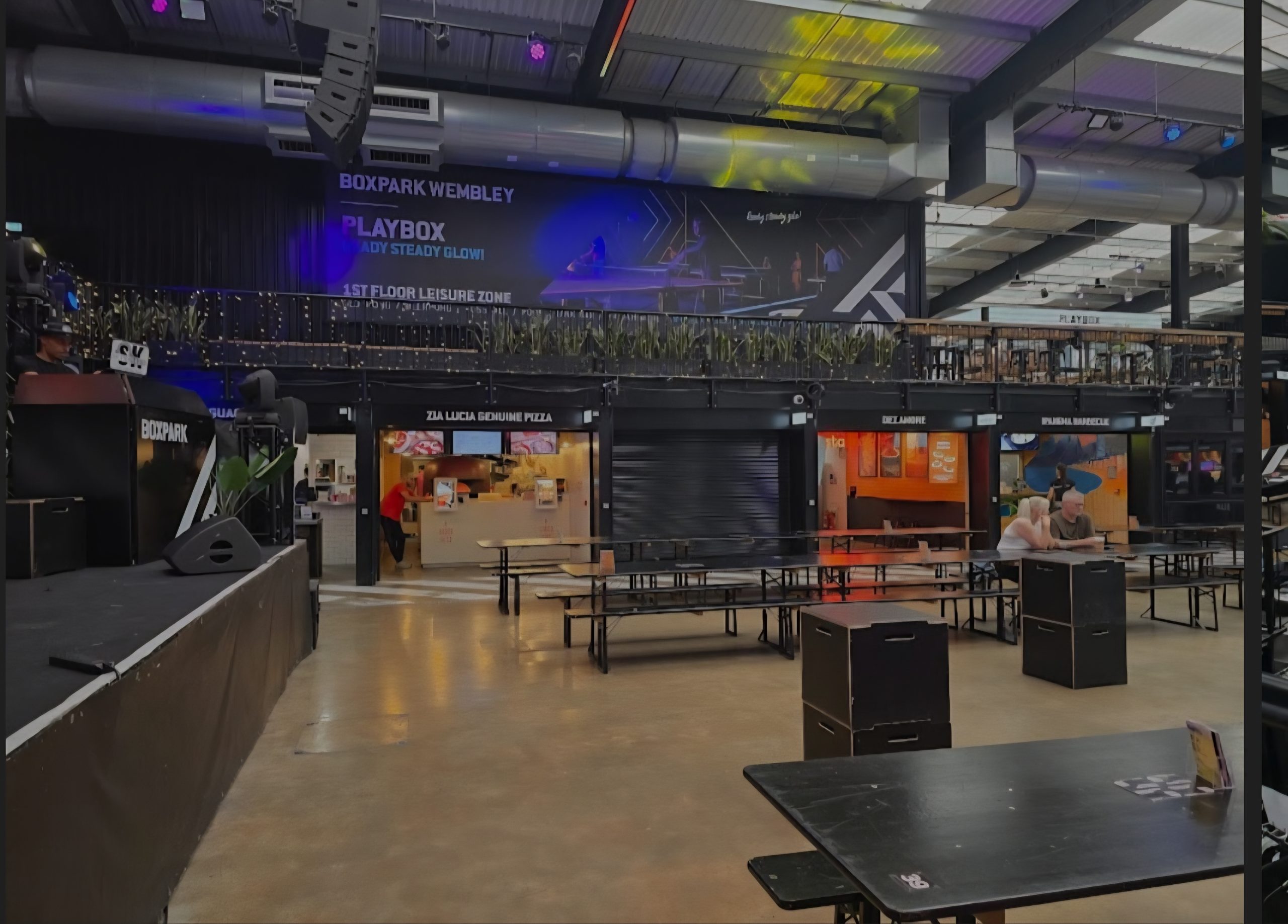
This model feels unstoppable, from STACK in the north east to London’s Boxpark, KERB and Arcade sites, and Manchester’s Escape to Freight Island and Society.
These communal UK food halls bring together multiple small outlets under one roof, blending the:
- Sociability of pubs
- Choice of shopping centres
- Creativity of street food markets
It’s easy to understand why food halls are one of most popular hospitality trends UK consumers are finding irresistible right now. Because they represent freedom, the ability to eat well, affordability, and sociability, without compromising on variety or experience.
For operators, they represent lessons in consumer dining behaviour too valuable to ignore.

What Makes Food Halls One of the Strongest Hospitality Trends UK Consumers Can’t Get Enough Of?
“When Roger Wade (Boxpark) decided to assemble a shopping mall made from 60 old shipping containers on a derelict site in Shoreditch almost a decade and a half ago, few could have imagined that it would start a trend for a new style eating and drinking that would occupy and rejuvenate disused venues the length and breadth of the country”, explained Restaurant’s Stefan Chomka in his recent article Running the halls: the food hall sector under the microscope.
That was where it all started. And now, it’s clear UK food halls are tapping into consumer needs in ways traditional bars, pubs and restaurants sometimes miss.
Take the following areas as prime examples:
- Variety of choice – No arguments over “Where shall we go?” Every guest can order what they want.
- Artisanal appeal – Independent vendors focus on quality and originality, giving diners the thrill of discovery.
- Convenience – A one roof experience saves time and decision fatigue.
- Atmosphere – Live music, shared tables, and lively interiors create an energetic vibe.
- Affordability – Smaller plates and mid-range pricing keep wallets happy.
- Novelty factor – Culinary browsing makes the experience itself as exciting as the food.
It works on multiple levels. So, what lessons for restaurants, bars and pubs can be found and leveraged, while maintaining a profitable food strategy?
5 Powerful Lessons Casual Dining Outlets Can Learn from Food Hall Trends
Food halls are undoubtedly competitors of traditional high street venues. Moreover, they’re also innovators.
Accordingly, it’s vital to borrow winning elements from food hall dining, without dismantling your brand’s core identity.
So, think about elements such as::
- Menu agility – UK food halls succeed by being trend responsive. Similarly, you should be leaning into data-driven restaurant menu development to keep offers sharp, relevant, and profitable.
- Micro-experiences – Shared plates, chef takeovers or collaborations (think Bundobust and Nell’s in Manchester), or themed evenings can replicate the excitement of culinary browsing.
- Atmosphere matters – Transform the ambience beyond the décor, with background playlists, lighting shifts, or seasonal pop-ups.
- Affordable profitability – Savvy procurement, portion control, and ingredient optimisation equip you to balance value and margin.
- Diversity and inclusivity – Catering to allergies, plant-based diets, and global tastes isn’t optional anymore. Food halls excel here – and so can you.
Ultimately, food hall trends are a reminder hospitality means more than serving food. And of all the hospitality trends UK-wide in 2025, this one calls for designing fresh, flexible, and socially connected experiences.

Bring Food Hall Thinking into Your Business
There’s no denying food hall trends have tapped into the cultural moment, with flexible dining, shared experiences, and affordable indulgence.
So, why not study this model and make targeted tweaks to futureproof your offer, while keeping your identity intact?
At 360 Food Partners, we help operators turn insights into action, from strategic restaurant menu development and procurement power to food safety and compliance.
You too can benefit from the expertise, rigour, and collaborative spirit needed to translate and implement the hospitality trends UK consumers are spending their hard-earned pounds on.
Get in touch if you’d like to explore a profitable food strategy that aligns with consumer dining behaviour and delivers for your bottom line.